Ducati Superleggera V4 Centenario: The Most Extreme Road-Legal Superbike Ever Built with 247 hp





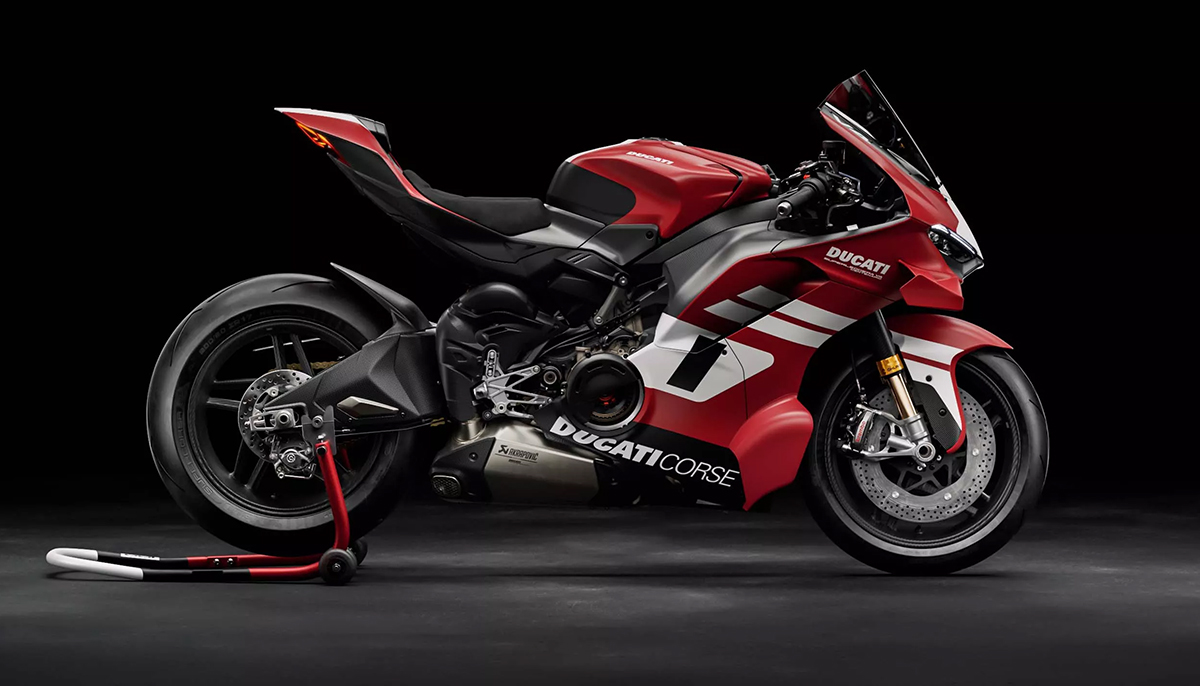
Ducati has unveiled the Superleggera V4 Centenario, a limited production motorcycle marking the company’s centenary and positioned as its most extreme road-legal machine to date.

Only 500 numbered units will be produced, alongside an additional 100 Tricolore editions, making it one of the rarest series motorcycles in Ducati’s history.
The motorcycle is priced at approximately €150,000, which converts to around NPR 2.61 crore, before taxes. Not something we’ll likely ever see in Nepal—but a clear statement of where superbike engineering has reached.
At its core, the Superleggera V4 Centenario is built around extensive use of carbon fibre and titanium, resulting in a wet weight of 173 kg without fuel, or 167 kg when equipped with its racing kit.
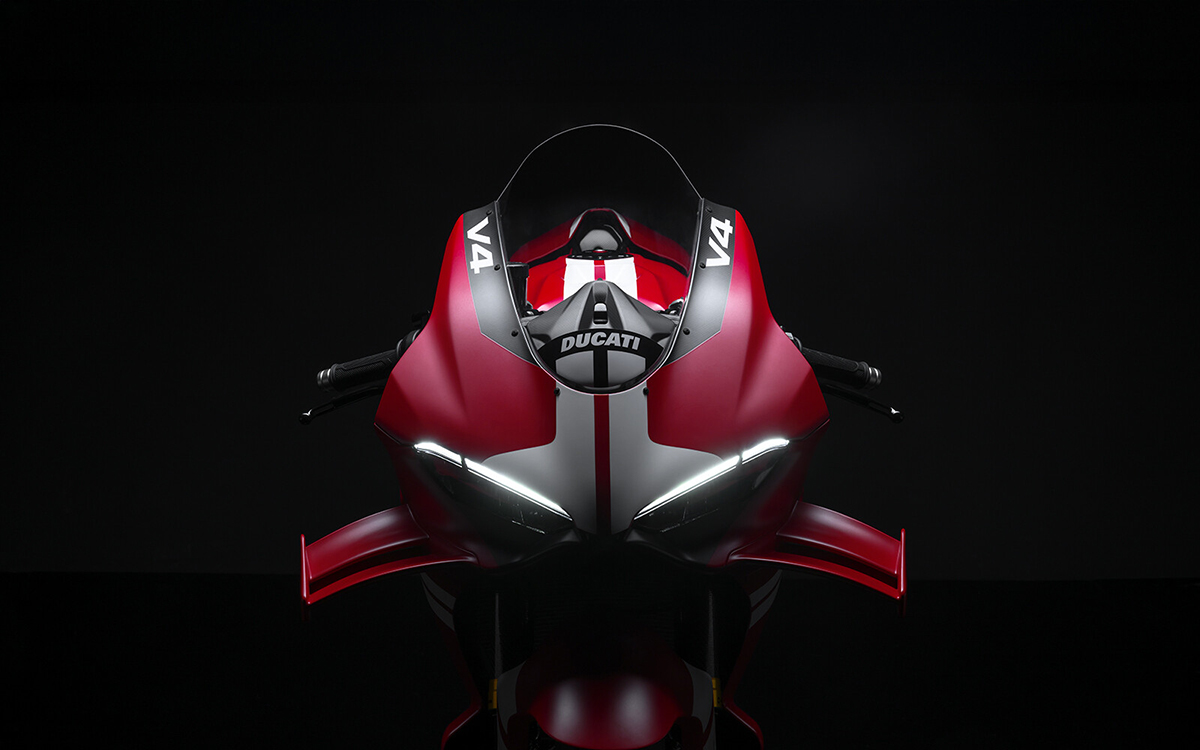
Power comes from the Desmosedici Stradale R 1100 engine, which produces 228 hp in road configuration and up to 247 hp with a racing exhaust, resulting in a reported power-to-weight ratio of 1.48 hp/kg.
Ducati has introduced several technologies on this model that are not typically seen on road-legal motorcycles. These include carbon-ceramic brake discs, a first for a production road bike, along with a carbon-fibre sleeved Ohlins front fork.
The braking system is designed to reduce inertia and unsprung weight while maintaining thermal stability under sustained high-load conditions, particularly during track use. The chassis is constructed entirely from carbon fibre components, including the frame, swingarm, subframes, and wheels.
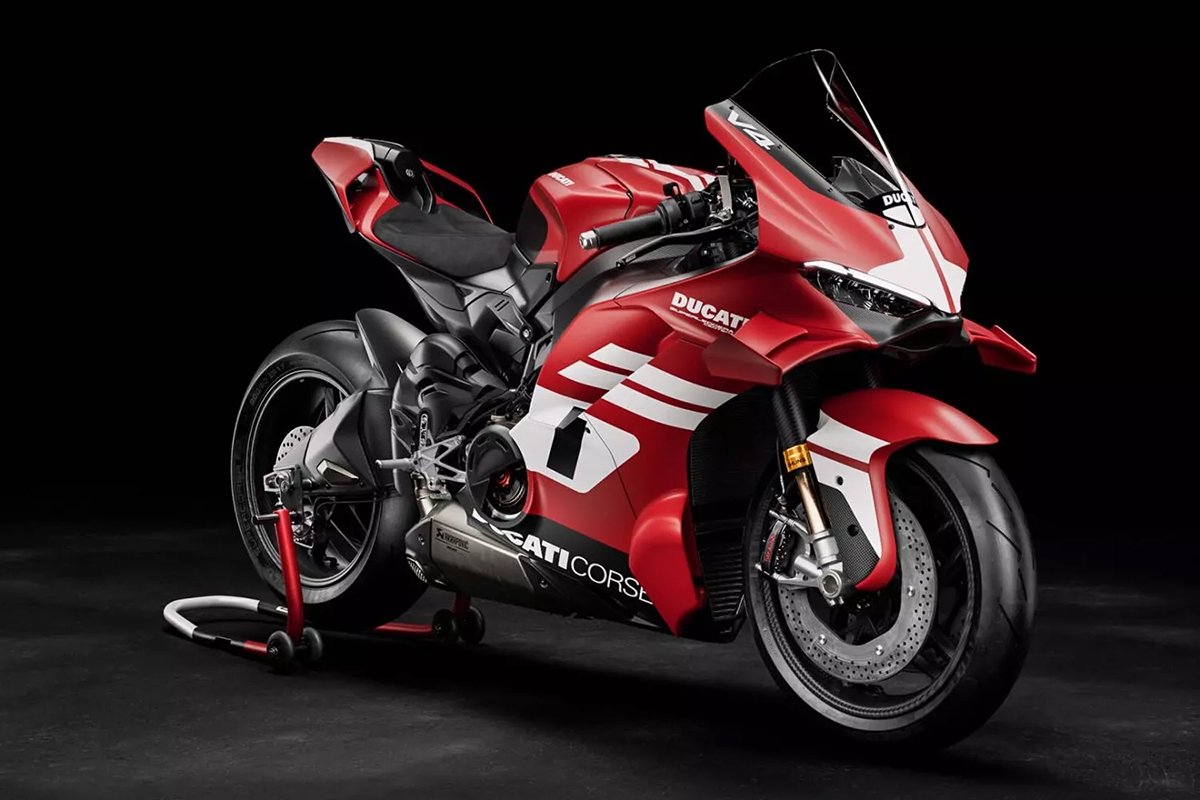
Compared to aluminium-based configurations used on the Panigale V4 platform, Ducati claims significant weight reductions while maintaining stiffness targets required for high-performance handling. Each carbon component undergoes aerospace-level non-destructive testing, including thermography and ultrasonic inspection.
The engine has been revised from the standard Desmosedici Stradale architecture, with displacement increased to 1,103 cc through a longer stroke. Internal components have been lightened using titanium hardware, tungsten balancing elements, and revised piston design.
The intake system uses larger 56 mm throttle bodies, and the transmission includes a race-oriented gearbox layout with Ducati Neutral Lock to prevent accidental neutral selection during aggressive downshifting.
Aerodynamic development follows Ducati’s MotoGP-derived design approach, with integrated wing elements and Corner Sidepods intended to influence downforce and grip at lean angles.
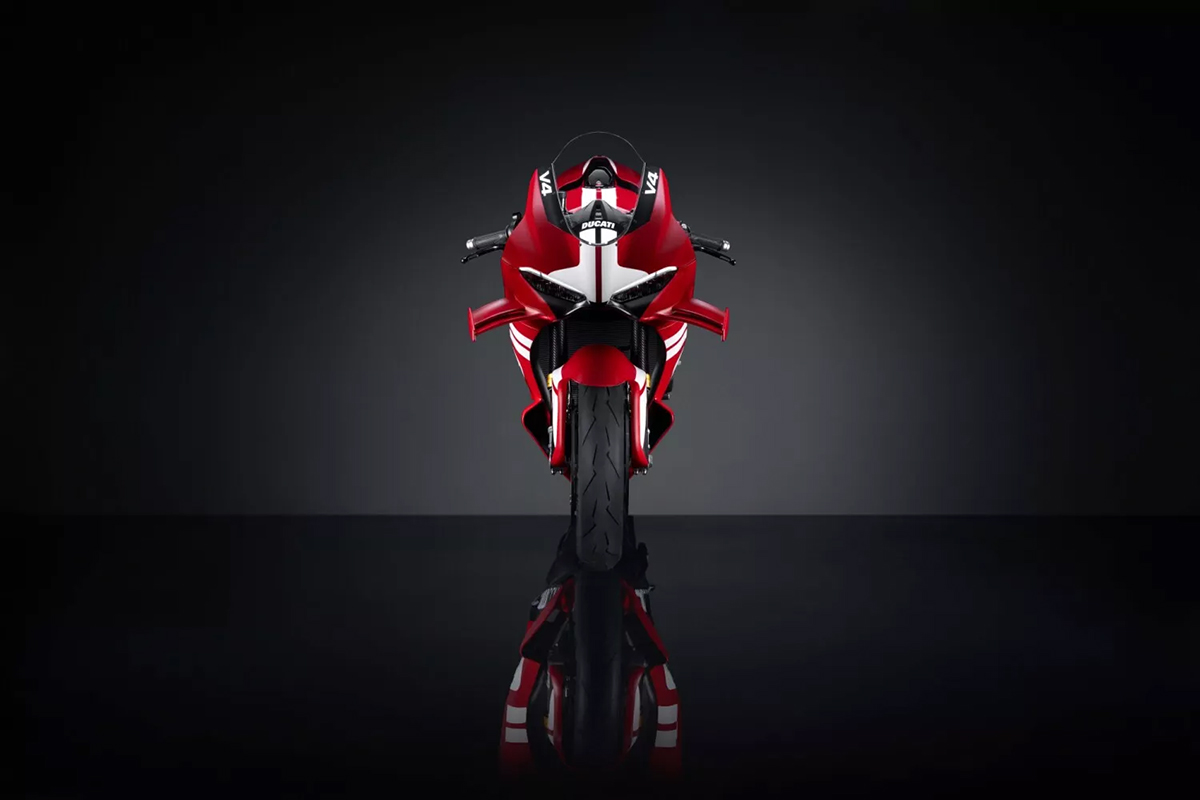
Electronics are based on Ducati’s DVO system suite, which manages traction, wheelie, slide, launch control, and engine braking through updated control algorithms intended to improve stability and consistency under varying riding conditions.
In addition to the standard production run, Ducati has also announced a Tricolore variant referencing historical racing liveries, along with a customer program offering selected owners access to a MotoGP Experience that includes guided track sessions and laps on a Desmosedici GP machine.




Honda CB500 Launched in India: Prices Start at INR 2.75 Lakh
Royal Enfield Revives the Original Himalayan with the New 440